


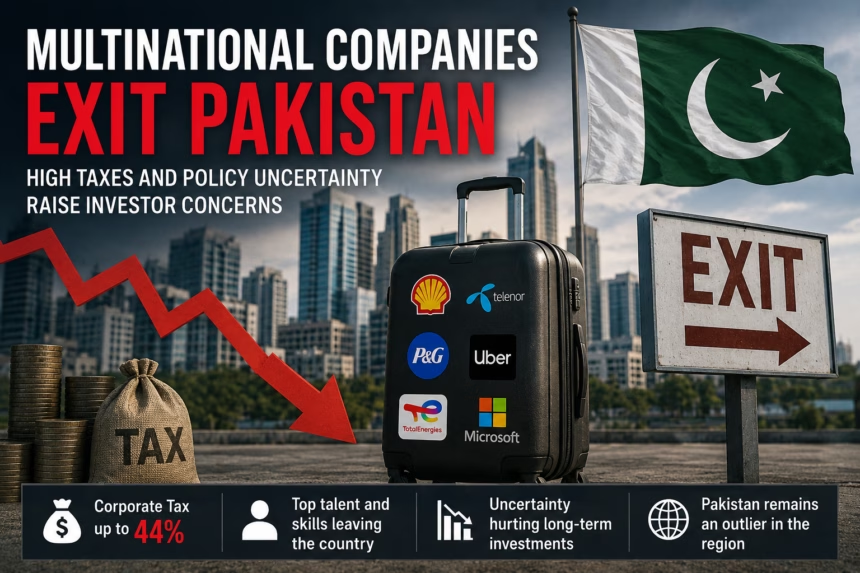
Pakistan is witnessing a gradual withdrawal and downsizing of several multinational companies, with business leaders warning that the country risks losing not only foreign investment but also valuable corporate expertise and skilled leadership.
Abdul Aleem, President of the Overseas Investors Chamber of Commerce and Industry (OICCI), said the departure of multinational firms carries consequences far beyond financial losses.
“The contribution of multinational companies is not just in dollars and cents. The biggest damage to Pakistan is the top talent and skills they take with them. Many of the CEOs leading businesses in Pakistan began their careers at these multinational companies,” Aleem said.
Tax Policy and Business Uncertainty
Executives from several multinational companies that have exited or reduced their operations since 2023 cited Pakistan’s unpredictable tax environment as one of the primary factors influencing their decisions.
According to industry executives, frequent tax changes and inconsistent fiscal policies have made long-term business planning increasingly difficult. Companies have struggled to forecast profitability, assess investment risks, and make strategic decisions amid an evolving regulatory landscape.
Corporate Tax Burden Remains High
Pakistan’s corporate sector continues to face one of the region’s heaviest tax burdens. Businesses currently pay an effective tax rate of up to 44 percent, comprising the standard 29 percent corporate income tax along with additional levies, including employee welfare contributions and the progressive super tax imposed on higher-earning companies.
Originally introduced as a temporary emergency measure, the super tax has been extended multiple times over recent years. Although the government reduced the rate slightly in the latest federal budget, it remains a significant cost for large corporations. Earlier this year, legal efforts challenging the tax were unsuccessful.
Business Community Calls for Competitive Reforms
In a statement issued in May, the Overseas Investors Chamber of Commerce and Industry noted that Pakistan’s corporate tax regime is significantly higher than many competing investment destinations in Asia.
For comparison, countries such as Thailand and Vietnam maintain corporate tax rates of around 20 percent, making them more attractive for multinational investment and regional expansion.
Government Attributes Exits to Global Business Strategies
Some multinational companies, including Telenor and Shell, declined to comment on their operations in Pakistan. Microsoft said its changes in Pakistan were part of a broader global business evaluation and optimization process, while Procter & Gamble, Uber, and TotalEnergies did not respond to media inquiries.
Finance Ministry adviser Khurram Schehzad maintained that the recent exits should be viewed in the context of broader corporate restructuring rather than solely domestic challenges. He said 79 new foreign companies entered Pakistan between 2023 and 2025, compared with 19 companies that exited during the same period.
Foreign Investment Still Faces Challenges
Despite improvements in Pakistan’s diplomatic engagement and macroeconomic stability, overall foreign direct investment (FDI) remains relatively modest. Business groups argue that creating a predictable tax framework, ensuring policy consistency, and improving the ease of doing business will be essential to attracting long-term foreign investment and retaining multinational corporations.
Analysts believe that strengthening investor confidence through stable economic policies and competitive taxation could play a key role in supporting Pakistan’s economic growth and industrial development in the years ahead.