


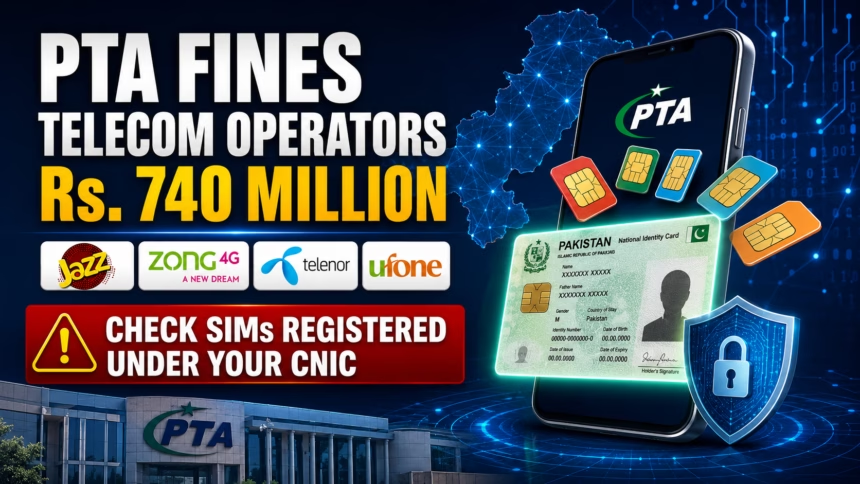
The Pakistan Telecommunication Authority (PTA) has imposed fines totaling approximately Rs. 740 million on Jazz, Zong, Telenor, and Ufone for issuing SIM cards without proper consent from CNIC holders. The regulator says the move is part of a broader crackdown on unauthorized SIM issuance, identity theft, and cyber fraud.
The Pakistan Telecommunication Authority has hit all four major mobile operators with a combined fine of roughly Rs. 740 million, after finding they issued SIM cards without proper consent from the national identity card holders those SIMs were registered to. Ufone received the largest penalty at over Rs. 233 million, while Zong was fined Rs. 155.6 million, and Jazz and Telenor were each penalized more than Rs. 116 million.
What Actually Happened
The regulator’s enforcement action targeted all four operators for violations of SIM issuance regulations, holding the companies responsible for serious irregularities in how SIMs were issued relative to the consent of the CNIC holders whose identities were used. In plain terms: SIMs were activated against people’s identity cards without those people knowingly signing off on it.
PTA has been explicit about why this matters beyond the fine itself — the regulator says unauthorized SIM issuance is a direct pathway to identity theft, cyber fraud, and financial crime, which is why it’s treating strict enforcement of SIM registration as a consumer protection and national security issue, not just a paperwork violation.
Why This Should Matter to You, Specifically
Here’s the part most coverage of this story is skipping: if a SIM was ever issued under your CNIC without your knowledge, you may not know about it until it’s used for something you’ll be blamed for — a scam call, an unregistered number linked to fraud, or a SIM used to intercept OTPs on your bank or mobile wallet accounts.
This isn’t hypothetical. Pakistan’s SIM registration system ties every number to a CNIC, which is exactly why fraudulent issuance is so valuable to bad actors — a SIM registered under someone else’s identity gives real anonymity to whoever’s actually using it, while leaving the CNIC holder legally and practically exposed.
What you can actually do about it right now:
- Check how many SIMs are registered under your CNIC. Send an SMS with your 13-digit CNIC number to 668 from any network. PTA’s system will text back a list of all mobile numbers currently registered to your identity.
- If you see a number you don’t recognize, report it immediately — either by calling your operator’s helpline or visiting a franchise/customer service center with your original CNIC. You can request the unauthorized SIM be blocked and investigated.
- Watch for suspicious account activity if you use mobile banking or wallets (JazzCash, Easypaisa, etc.) — an unauthorized SIM sharing your registered number pool is a known vector for SIM-swap style fraud.
- Keep an eye on further PTA enforcement. Rs. 740 million in fines signals PTA is treating this as an ongoing compliance push, not a one-off. Expect tighter checks at franchise/retail level going forward, which may mean slightly slower SIM issuance at outlets in the near term — a small inconvenience worth the tradeoff.
The Bigger Picture
This enforcement action lands alongside a broader push by PTA this month — including finalizing eSIM transfer rules and accelerating 5G rollout — that points to a regulator trying to modernize oversight of an industry that’s grown faster than its compliance systems. Fraudulent SIM issuance has quietly been one of the biggest gaps in that system for years; a fine at this scale is one of the more serious signals yet that PTA intends to close it.
Have you checked how many SIMs are registered under your CNIC? It takes 30 seconds — do it today.